.png)

OTC Hearing Aids vs Prescription — An Audiologist's Take
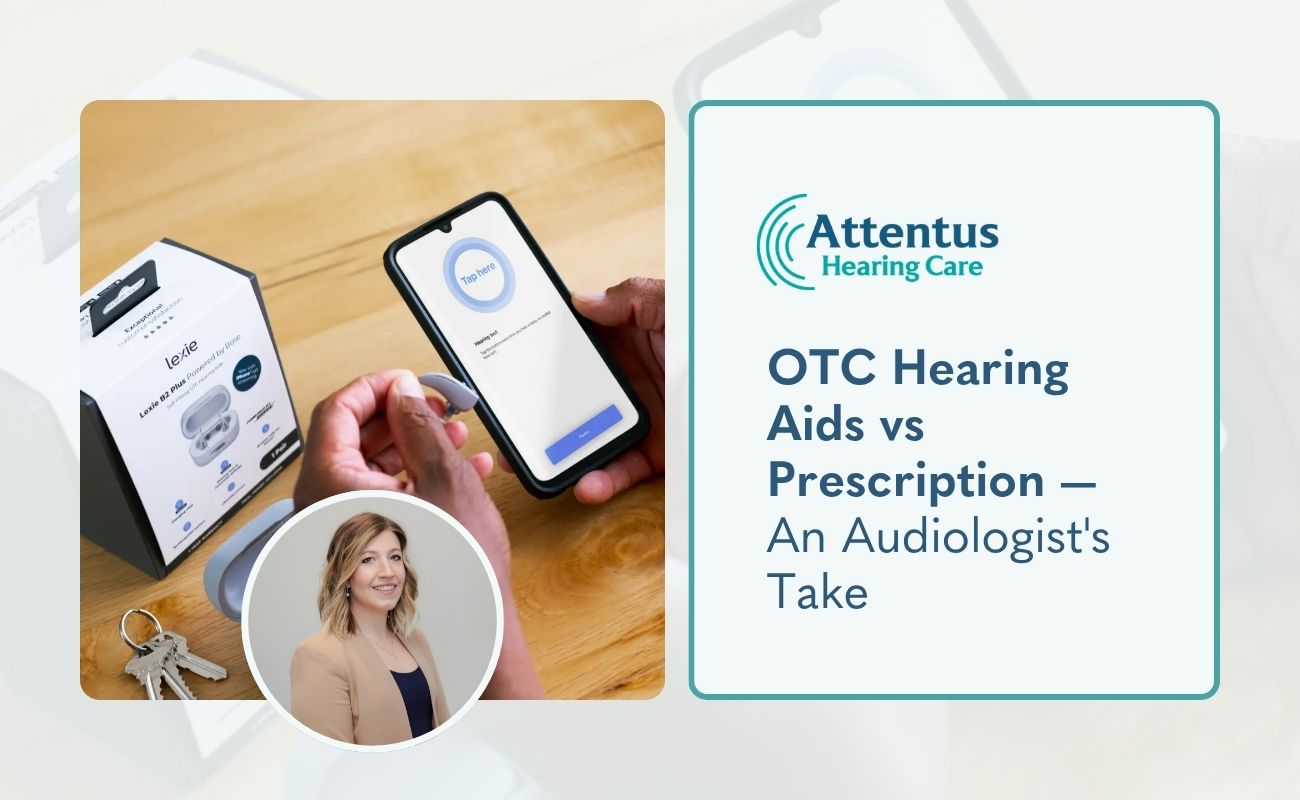
Walk into any pharmacy or scroll Amazon, and you'll find hearing aids sitting right next to reading glasses and blood pressure cuffs. That accessibility is genuinely appealing — lower cost, no appointments, no waiting. But there's a real difference between grabbing something off a shelf and getting hearing aids fit by an experienced audiologist. Understanding that difference could save you money, and more importantly, it could save your hearing.
What OTC Hearing Aids Actually Are
In 2022, the FDA created a new category allowing adults with mild to moderate hearing loss to buy hearing aids without seeing a professional first. These aren't the cheap amplifiers from infomercials — many are legitimate devices from real manufacturers with solid technology inside.
The problem isn't the hardware. It's the setup.
OTC hearing aids are self-fit. You adjust them through a smartphone app based on how things *sound to you* in the moment. There's no actual measurement of your hearing involved. For some people, that's fine. For most, it means the devices are never quite dialed in to what their ears actually need.
What Happens During a Professional Fitting
A prescription hearing aid starts with a full hearing evaluation. An audiologist maps out exactly where your hearing loss falls — which pitches, how severe, and whether your ears are different from each other. That information becomes the blueprint for programming your devices.
At Attentus Hearing Care, every fitting includes Real Ear Measurement (REM) — a process that places a tiny microphone in your ear canal to confirm the sound levels being delivered actually match what your hearing requires. It's not guesswork. You get verification that your hearing aids are doing their job before you leave the office.
The fitting doesn't stop there, either. Your brain takes months to fully adjust to hearing sounds it's been missing. That's why follow-up appointments matter — your audiologist can keep fine-tuning as your experience develops.
When OTC Might Work for You
OTC devices aren't useless. If you have genuinely mild, symmetric hearing loss — meaning both ears are roughly the same — you might notice a real improvement. Struggling a bit in noisy restaurants? Asking people to repeat themselves sometimes? An OTC device could help in situations like those.
Some people also use them as a first step. They try OTC, realize they need more support, and then come in for a proper evaluation. That's a reasonable path. It is however very important to get a comprehensive hearing evaluation before purchasing devices, as only those with certain levels of hearing loss are candidates for OTC hearing aids.
Where OTC Devices Fall Short
Here's the part worth paying close attention to. Most people who buy OTC hearing aids believe they have mild hearing loss — but they're often wrong, and it's not their fault. Hearing loss sneaks up on you. You adapt slowly over time. You blame the background noise, the person mumbling, the restaurant's acoustics. From the inside, moderate or even significant hearing loss can feel like a minor inconvenience.
A hearing test often tells a very different story.
OTC devices also can't handle asymmetric hearing loss, where one ear is noticeably worse than the other — a common situation that requires individualized programming for each ear. They won't catch underlying medical issues like fluid buildup, ear infections, or other conditions that need treatment before amplification makes any sense. And they're simply not designed for anything beyond the mild-to-moderate range.
The Technology Question
OTC advocates often point out that the tech gap has narrowed, and that's fair. Some OTC devices do use solid processing. But technology alone doesn't equal results — it has to be calibrated to your specific hearing.
At Attentus, we fit hearing aids from Phonak, Oticon, Widex, Signia, and Starkey. These brands offer some of the most advanced sound processing available. What makes them work well for our patients isn't just the hardware — it's that they're programmed precisely to each person's hearing profile, worn correctly, and adjusted over time as needs change. That's what OTC simply can't replicate.
The Right Starting Point Is a Hearing Test
If you're on the fence about what route to take, start with a hearing evaluation. You might discover your loss is mild enough that OTC is a reasonable option. You might find something that needs more careful attention. Either way, you'll have real information to make the right call — instead of spending money and hoping for the best.
Dr. Abby Holauchock at Attentus Hearing Care offers in-home hearing evaluations throughout Bucks and Montgomery counties, so there's no clinic commute or waiting room to deal with. If you're not sure what you're missing, give us a call at 267-669-1345. We're happy to talk it through.
